Providing immediate relief from things that are overwhelming can be integrated into a schedule that doesn’t have as much in it. If there is a lot already being organised then it it harder to stop and make a decision about the best way to take care of yourself and your family. Doing things together and doing them separately can take place in the same room or in the same house or within hearing of each other. The level of supervision often depends upon the tasks being completed and how independent the child / young adult is with them.
Visual schedules which provide details about who is doing what can help block the individual with a disabilities needs from interacting with the rest of their family as they learn through repeated feedback that they need to do spend some time by themselves without a family member within immediate grasp or outreach of their arm or voice or immediate request.
A timer can be helper to count down how long you will be whilst you are doing other tasks however distress can still frequently occur because of unanticipated needs because I don’t know where you are in the house and I don’t know how to fix the issue that I am having. Providing more detail in the I need to do some washing and put the laundry out can help the individual understand why you are moving around the house from room to room with different levels of time in each, why all of a sudden you look tired, why you flop down heavily on the couch when done and are less likely to want to go outside to play. Social stories are helpful but they are time consuming to make and can often result in an individual being strict on you didn’t do the steps in the exact right way which makes the whole interaction / family time stressful. Most tasks have a sequence of steps. Our language can help even if it’s not well understood. It is a stopper. It stops individuals with disabilities from making us feel like we didn’t provide enough information, which can make us feel less resilient or less like we are doing a good or ok job in taking care of them.

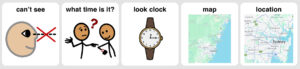
Schedules can be for personal time. Schedules can be for work time. If you are running errands during the day, a list of places can help an individual know how long you are likely to be because of the driving time. Knowing the location itself, its GPS, can help an individual think through how long it might take you to return if they need help all of a sudden. Knowing that you are only half an hour away if the carer asks for you is something that can help keep someone calm all day until you return.
Keeping a map open on your phone / iPad when you are talking about what you are doing for things outside of the house can help build up knowledge over time for everyone in the house’s schedule.